
What an IPL hair removal device is
IPL stands for Intense Pulsed Light. Unlike a professional laser, which uses a focused wavelength, an at-home IPL device releases broad-spectrum light pulses that target pigment in the hair. Results vary with skin tone, hair color, the device, and consistency of use.
At-home IPL devices are consumer tools designed for long-term routines at lower intensity than professional equipment. They are commonly used on areas such as the legs, underarms, bikini line, and arms, but the areas approved for use vary by model.
As an Amazon Associate I earn from qualifying purchases.
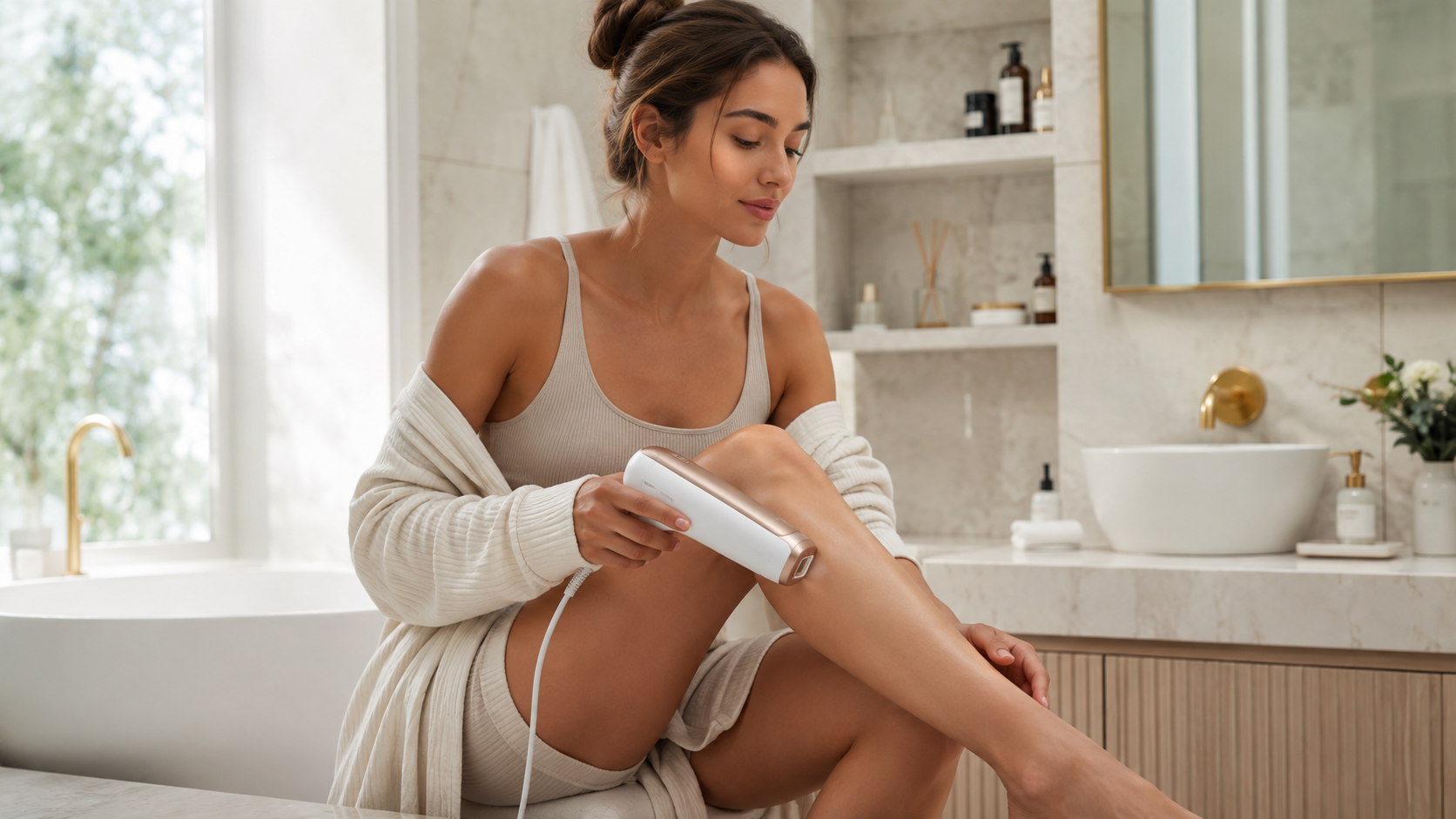
Quick Picks: IPL Hair Removal Devices to Compare
Braun Silk Expert Pro 5
Best for: Readers who want a well-rounded at-home IPL device with broad and precision treatment options.
Its interchangeable heads and guided controls make it a strong all-purpose comparison option.
Ulike Air 3
Best for: Beginners who value simple modes and a cooling contact surface.
Its compact format and automatic flashing option may make a first IPL routine feel more approachable.
Ulike Air 10
Best for: Readers who expect to treat larger areas such as the legs or arms.
Its wider dual-light treatment design is positioned for quicker, continuous coverage.
IPL Device Comparison
| Product | Best for | Skin tone / routine fit | Best treatment area | Who should skip it | CTA |
|---|---|---|---|---|---|
| Braun Silk Expert Pro 5 | Best overall | Guided controls for compatible skin and hair tones | Mixed body and precision areas | Readers who want a basic device for one small area | Shop on Amazon |
| Ulike Air 3 | Beginner-friendly use | Simple modes and cooling contact for a regular routine | Body areas and straightforward passes | Readers prioritizing small, sharply curved areas | Shop on Amazon |
| Ulike Air 10 | Faster broad coverage | Multiple modes for compatible users treating several areas | Legs, arms, chest, and other larger zones | Occasional users treating only a limited area | Shop on Amazon |
What to compare before buying
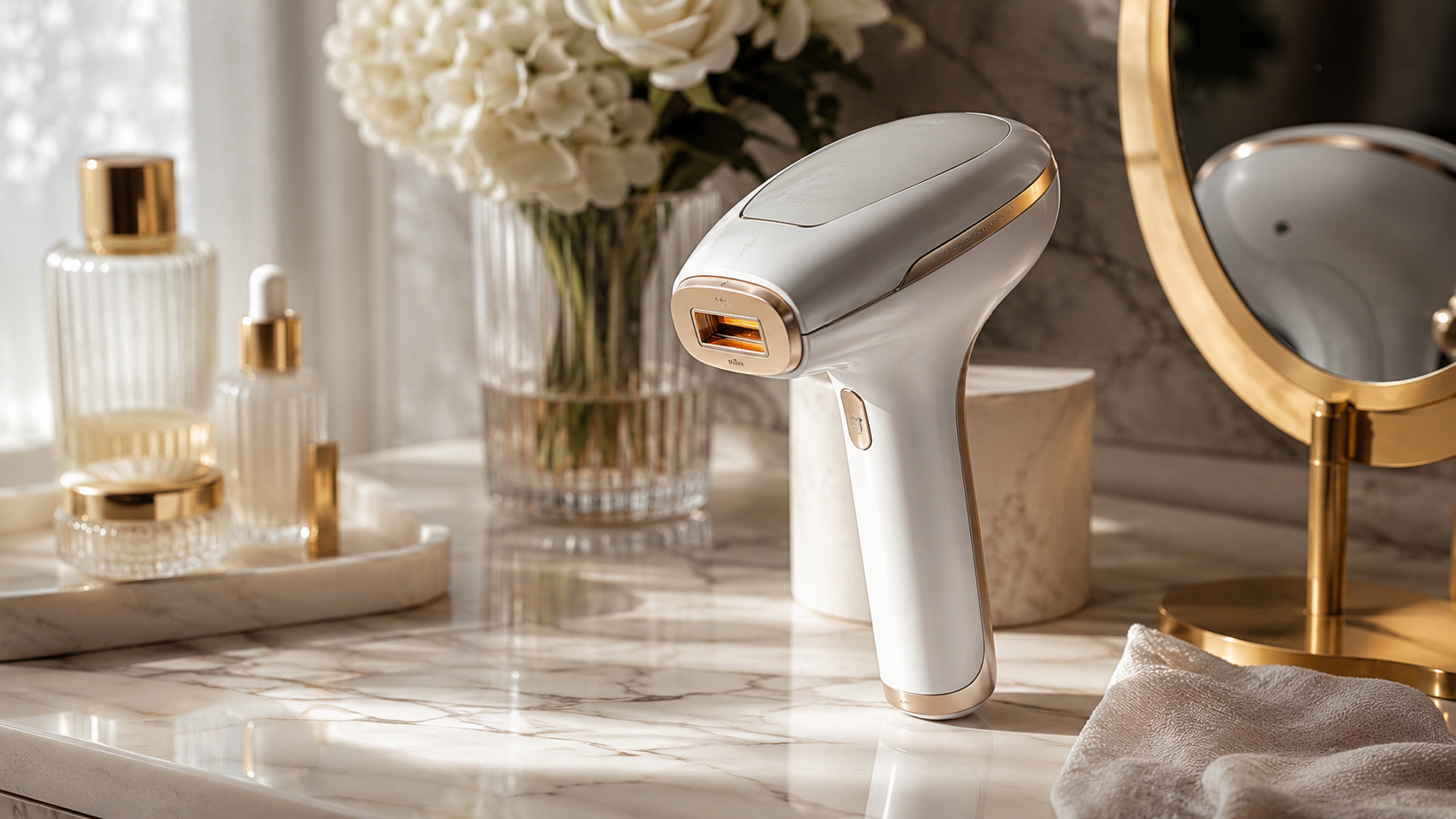
Not every IPL device suits every person. Compatibility and safety matter more than flash counts or a long list of modes.
Skin tone and hair color compatibility
IPL relies on contrast between pigment in the hair and the surrounding skin. It generally works best on lighter skin tones with darker hair. It is usually not effective on white, grey, or very light hair, and many devices are not suitable for deeper skin tones.
Check the compatibility chart for the exact model before buying. A skin-tone sensor is helpful, but it does not replace the manufacturer’s instructions.
Treatment areas
Confirm that the device is designed for every area you plan to treat. A wide treatment window and glide mode can speed up passes on the legs or arms. A precision head gives more control around smaller approved areas.
Never assume that a device intended for the body can be used around the face or other sensitive areas. Read the area-specific guidance first.
Safety features
Many current devices use a skin-tone sensor to adjust intensity or prevent a flash when the detected tone is outside the compatible range. Clear contact sensors, intensity controls, and detailed contraindications also make a device easier to assess responsibly.
Flash count and device lifespan
Flash count indicates the total number of pulses a device is designed to deliver. Large numbers can sound impressive, but most personal routines will not use the full count quickly. Compatibility, comfort, and warranty are usually more useful comparison points.
Ease of use
Glide or automatic modes are useful for larger areas. Manual stamping gives more control on smaller zones. Also consider the device’s weight, cord placement, control layout, and how easily you can maintain consistent contact with the skin.
Compare the featured IPL devices on Amazon
Who should be cautious
IPL is not appropriate for everyone. Seek professional guidance before use if you have a skin tone outside the device’s safe range, take medication that increases light sensitivity, have a photosensitive condition, are pregnant or nursing, or have tattoos, dark spots, moles, or recent sun exposure in the treatment area.
Always read the manufacturer’s full contraindication list. Do not flash over tattoos, irritated skin, or an area the instructions exclude.
Final buying checklist
Before purchasing an IPL device, ask:
- Is your skin tone and hair color within the compatible range?
- Is the device approved for every area you plan to treat?
- Does it include a skin-tone or contact sensor?
- Is glide mode available for larger areas?
- Is a precision head useful for your routine?
- Are the contraindications and schedule clearly explained?
- Does the return policy allow time to confirm fit and usability?
View IPL Hair Removal Devices on Amazon
Recommended IPL Hair Removal Devices to Consider
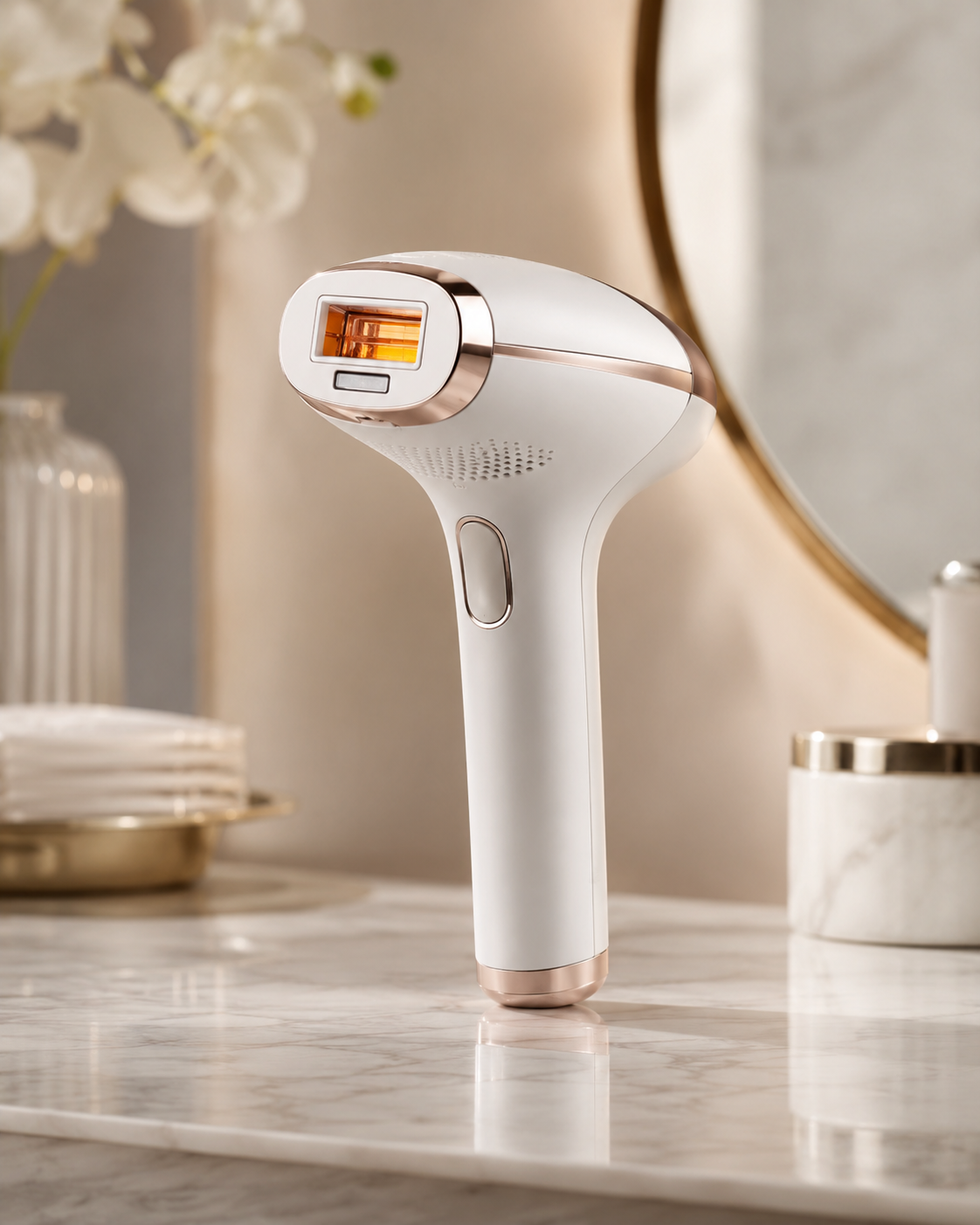
These recommendations are based on product positioning, features, and editorial relevance. They are not based on personal testing or medical claims.
Braun Silk Expert Pro 5
Best for: Readers who want a well-rounded at-home IPL device for both broad and more precise treatment areas.
Why it may be worth considering: The standard and precision heads make this model adaptable across different parts of a routine. Its skin-tone sensing and comfort settings may also reduce some of the guesswork for compatible users.
Who should skip it: It may be more equipment and expense than needed for someone who plans to treat only one small area.
Ulike Air 3
Best for: Beginners who value straightforward controls and a cooling contact surface.
Why it may be worth considering: Its compact format, three modes, and automatic flashing option give new users a relatively simple set of choices. The cooling surface may appeal to readers concerned about warmth during a session.
Who should skip it: Its flat treatment window may feel less convenient on small or sharply curved areas.
Ulike Air 10
Best for: Readers who expect to treat larger areas and want a device designed around faster coverage.
Why it may be worth considering: Its dual-light treatment window and automatic modes are positioned for broader, continuous passes. A skin sensor and several operating modes also give compatible users options when moving between treatment areas.
Who should skip it: The larger feature set may be unnecessary for occasional use on limited areas.
IPL Hair Removal FAQ
Does at-home IPL hair removal work?
At-home IPL can reduce visible regrowth for some compatible users when it is used consistently and according to the instructions. Results vary, and maintenance sessions may be part of the routine.
Who should avoid IPL hair removal devices?
Anyone outside the device’s skin-tone or hair-color range should not use it. People with photosensitivity, certain medications, active skin irritation, tattoos in the treatment area, or other listed contraindications should seek professional guidance.
Can IPL be used on darker skin tones?
Many consumer IPL devices are not suitable for deeper skin tones because the light can be absorbed by pigment in the skin. Check the exact compatibility chart and do not rely on a general category claim.
How often should you use an IPL device?
Follow the schedule supplied with the specific device. Initial and maintenance schedules differ, and more frequent use than directed does not guarantee better results.
What should I compare before buying an IPL device?
Start with skin-tone and hair-color compatibility. Then compare approved treatment areas, sensors, treatment window size, operating modes, controls, warranty, and return policy.
For related research, browse our Best Devices, Buying Guides, and Reviews. You can also compare another at-home category in our LED face mask buying guide.
Compare IPL Hair Removal Devices on Amazon
Choosing an IPL device starts with compatibility, not marketing claims. Once skin tone, hair color, and treatment areas are confirmed, compare the controls and format that best fit the routine you can follow consistently.